
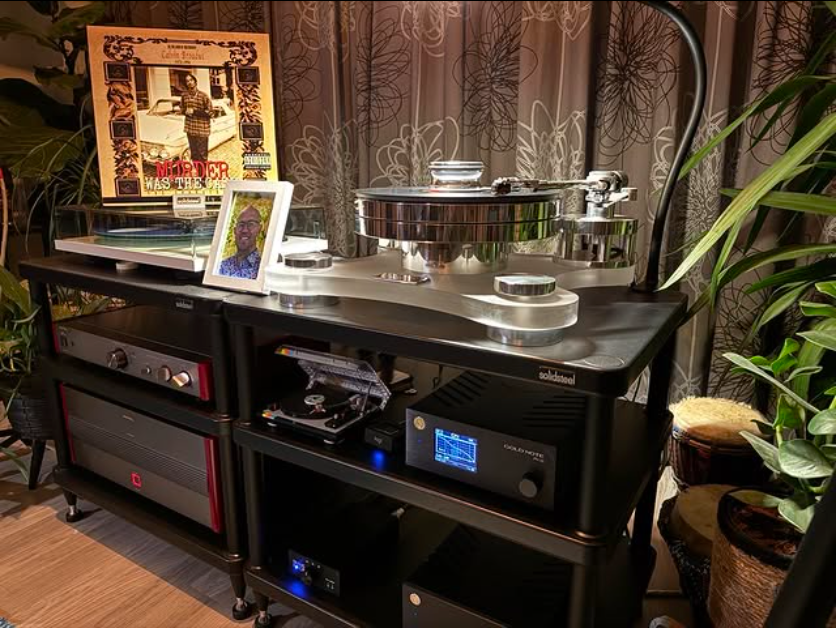
Choosing the right amplifier for your turntable is crucial for optimal enjoyment of your vinyl collection. An amplifier converts the signal from your turntable to a level your speakers can reproduce. But what exactly should you look for when purchasing one? Here are some key points to consider.
Setup and photo: music_on_vinyl
1. Balance between turntable, amplifier & speakers
There's little point in buying a fantastic amplifier if your speakers are inferior. The key is to keep everything in balance. In my opinion, the speakers are the most important, followed by the amplifier, and then the turntable. Without good speakers, your entire system is worthless. Of course, this doesn't mean you should only invest in those—quite the opposite! Try to distribute your budget evenly among quality components to elevate your entire system. Keep this in mind when you're searching for a great amplifier!
2. Phono input or preamplifier
Traditional turntables produce a weak signal that needs to be amplified. This requires a phono preamp. Some amplifiers have a built-in phono input, which is convenient for direct connection. If your amplifier doesn't have one, you can choose a turntable with a built-in preamp or purchase an external phono preamp. So always check your turntable to see if it has a preamp. If yours doesn't, I recommend choosing an amplifier with a phono input.
3. Power and speaker compatibility
It's important that the amplifier's power output matches the specifications of your speakers. An amplifier that's too weak can lead to distortion, while an amplifier that's too powerful can damage your speakers. Check the impedance (expressed in ohms) and the recommended power output of your speakers and ensure the amplifier matches these. For more information, consult the Bax-Shop article .
4. Connection options and additional functions
Consider which devices you want to connect besides your turntable. For example, do you have a CD player, streamer, or TV that you want to connect to the amplifier? Make sure the amplifier has enough and the right type of inputs for all your equipment. Additionally, features like Bluetooth connectivity or a built-in DAC (Digital-to-Analog Converter) can be useful, depending on your listening habits. An amplifier can be a significant investment, and you naturally want to get the most out of it. An inventory of the equipment you'll be connecting is definitely recommended.
5. Sound quality and timbre
Every amplifier has its own unique sonic character. It's therefore advisable to listen to several models before making a choice. What sounds warm and full to one person might sound too heavy to another. Let your ears decide and choose an amplifier that suits your musical preferences and the timbre of your speakers.
6. Budget and price-quality ratio
Amplifiers come in various price ranges. Determine your budget beforehand and look for the best option within that range. Keep in mind that a higher price doesn't always guarantee better sound quality. Read reviews, ask experts for advice, and, if possible, listen to different amplifiers within your budget yourself.
Choosing the right amplifier takes some research and personal consideration, but with these tips, you'll be well on your way to making an informed choice that will elevate your listening experience.
Share:
Sticky Vinyl Contest: Win €100 LP Credit! 🎶✨
Here's what to look for when buying speakers for a turntable